
Ronda
Ronda: Historical Grandeur Above the Abyss
Ronda is, undoubtedly, one of the oldest and most spectacular cities in Spain.
Perched upon a towering rocky plateau in the heart of the Serranía de Málaga, the city is split in two by the Tajo, a gorge over 100 meters deep that carves a dramatic and world-unique landscape.
This strategic location made Ronda a coveted bastion for Celts, Romans, and Moors throughout the centuries.
To walk through Ronda is to take a journey through time. Its old town, with its medieval layout and Moorish reminiscences, contrasts with the elegance of its monumental bullring and the audacity of the New Bridge (Puente Nuevo), an 18th-century engineering masterpiece.
A favorite destination for Romantic travelers like Ernest Hemingway and Orson Welles, Ronda captivates with its legendary atmosphere, its sunsets over the abyss, and a tradition felt in every palace and city wall. It is a place where nature and architecture merge to offer one of Andalusia’s most beautiful vistas.

Sights in Ronda
The New Bridge
The New Bridge (Puente Nuevo)
It is the city’s most iconic monument and an architectural marvel. Built from stone between 1751 and 1793, this masterpiece of engineering connects the old Moorish town with the modern district, spanning a gorge nearly 100 meters deep. It offers the most breathtaking views of the Tajo de Ronda and the Guadalevín River below. Inside the bridge, a small chamber once served as a prison, adding a layer of dramatic history to its imposing presence.


The Ronda Bullring
Inaugurated in 1785, this is one of the oldest and most beautiful bullrings in Spain. It is considered the birthplace of modern bullfighting, specifically the "Ronda style." The arena is distinguished by its unique Neoclassical architecture, featuring two tiers of elegant stone arcades supported by 136 Tuscan columns. Beyond its architectural grandeur, it houses the museum of the Real Maestranza de Caballería de Ronda, one of Spain’s oldest and most prestigious noble equestrian orders.
Mondragon Palace
This was the former residence of the Moorish kings and, later, the Catholic Monarchs. It is an exceptional Mudejar-Renaissance building that currently houses the Municipal Museum. Its architecture is characterized by beautiful internal courtyards and exquisite tilework. However, its most remarkable feature is the hanging gardens perched over the edge of the cliff, offering a sense of incomparable serenity and stunning views of the surrounding landscape.

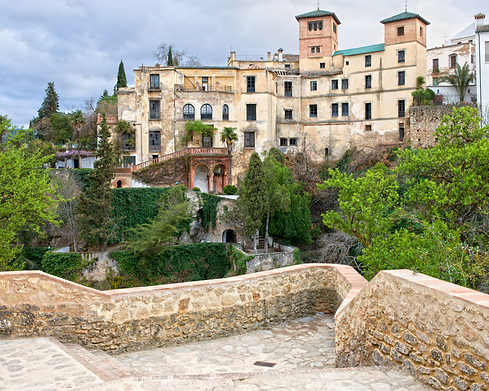
The House of Moorish King
Despite its name, the current palace is a 20th-century Neo-Mudejar style building. However, its true treasure dates back to the Moorish era: The Water Mine. This is a complex 14th-century military engineering feat hidden within the cliffside, featuring a staircase of over 200 steps carved directly into the rock that descends 60 meters to the bottom of the Guadalevín River. This structure allowed the city to be supplied with water during sieges and was a vital component of Islamic Ronda's defense system.