
Vila Real de Santo Antonio
Located in the southeastern corner of Portugal, where the Guadiana River meets the Atlantic Ocean, Vila Real de Santo António is a charming coastal town that combines natural beauty with fascinating history. Founded in 1774 by order of the Marquis of Pombal, it was designed as a model city to showcase Enlightenment-era urban planning following the destruction caused by the Lisbon earthquake of 1755. With its elegant grid streets, neoclassical architecture and proximity to both the river and the sea, Vila Real de Santo António offers a tranquil, sun-drenched destination ideal for those seeking relaxation and cultural exploration. Its location on the border with Spain gives it a unique character, shaped by centuries of trade, intercultural exchange and maritime life. The city is also known for its wide, tree-lined squares, tiled facades and relaxed atmosphere. Just minutes from pristine beaches, nature reserves and historical monuments, Vila Real de Santo António is a gateway to the Algarve that invites visitors to relax and enjoy the rhythms of local life.

Sights in Vila Real de Santo António
Praça Marquês de Pombal
The heart of the town, this grand square is surrounded by elegant Pombaline-style buildings and shaded by orange trees. At its center stands an obelisk honoring the town’s founder. It’s a great place to sit, enjoy a coffee, or begin a walking tour of the town’s historical core.


Vila Real de Santo António Lighthouse
Built in the early 20th century, the lighthouse marks the mouth of the Guadiana River and provides panoramic views of the surrounding coastline. Visitors can often climb to the top for one of the best viewpoints in the area, especially at sunset.
Avenida da República
and the Riverfront
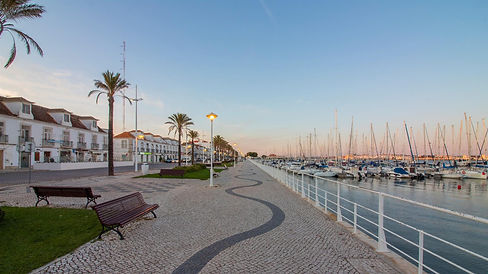
A scenic promenade that runs along the Guadiana River, this area is lined with palm trees, cafés, and views across the water to Spain. It’s perfect for a sunset walk or a ferry ride across to Ayamonte, just on the other side of the river.

VRSA Cultural Center and Municipal Archives
This small but informative center hosts rotating exhibitions on the town’s history, maritime life, and urban planning. The building itself is a fine example of neoclassical design and gives insight into the unique founding of the town in the 18th century.